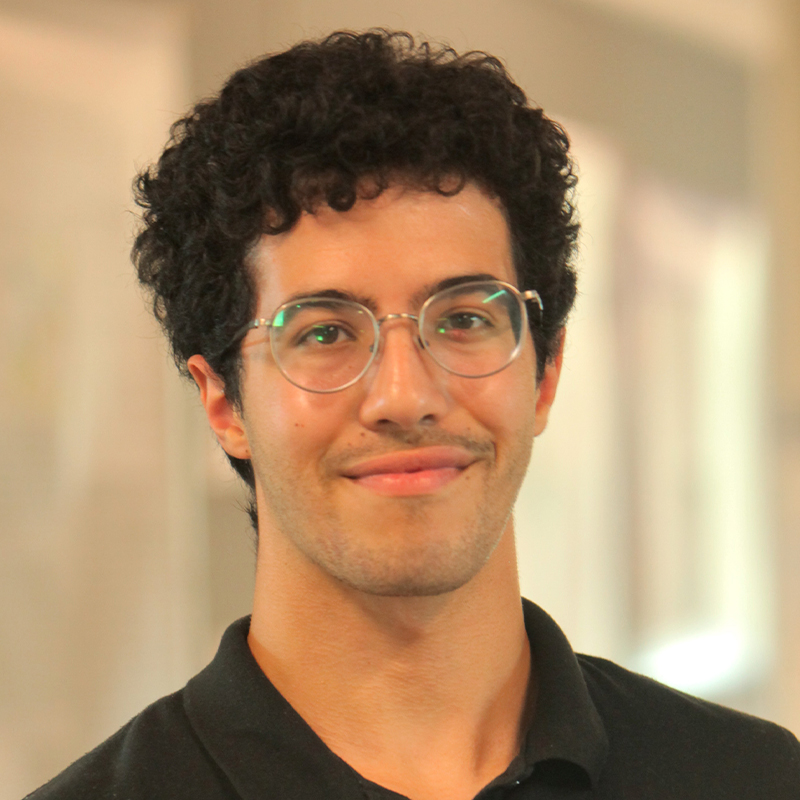
Major: Chemistry
What are you researching?
I’m researching computational chemistry. My research project for this summer is building a neural network to address a twofold critical problem. I’m developing a generalizable modeling neural network and that is to predict the toxicity of certain chemical compounds. The aim is to make it as accurate and as optimum as possible to predict the toxicity of these compounds.
How did you come to this area of research and your research question in particular?
So I contacted Grady Hanrahan, PhD, the chair of the chemistry department. We wanted to incorporate computer science in our project, so he suggested incorporating coding and using programming softwares in the chemistry field. This was a great way to start my coding learning journey.
What methodologies are you using or what’s your process been?
This project has two parts. The first part is to use programming software and that is to build coding scripts to create this neural network, which we will then use in the lab. The second part is predicting the toxicity of chemical compounds. So the first part was mainly writing coding scripts on my computer using Python and programming software like Python and MATLAB and R, and then we would collect data in the lab.
Are you expecting to continue this research through the next year?
Yes! We will definitely continue with this project in the fall and that would be part of directed research with Dr. Hanrahan.
What is the name of your fellowship?
The John Stauffer Research Fellowship in Chemical Sciences fellowship.
How does this connect to your faculty mentor’s research?
Dr. Hanrahan has specialized in computational chemistry, so I felt it would be the best mentorship I would get into developing these skills of my own. I reached out to Dr. Hanrahan and he recommended how to get guidance and how to develop these skills in the best way possible, especially with this program being only eight weeks. He had all the resources and he was able to provide great advice, especially while I studied abroad.
Has anything surprised you so far about the research process or your results?
Yes. I didn’t expect to have found such a great amount of data. Research has been at a certain point, redundant in the fact that I have to run the coding script so many times and then generate so many numbers it requires. I learned that it requires so much patience and especially with computer science. I now understand where the struggle comes from as in making modifications to your code basically.
What brought you to choose your major?
I always had an interest in science when I was in high school, but then I’ve had the tendency of exploring the chemical aspects of nature and all of that. It’s always been about the involvement in lab chemistry (for me) and I’ve learned more by taking classes at Cal Lutheran. It’s very engaging because you have to be very agile using the lab equipment.
What are your plans after graduation?
Grad school is definitely on the horizon. I am planning to reach out to faculty, and Dr. Hanrahan also is going to be of great help and support with this. We will be working on grad school applications together and I’m looking to start enrolling into a PhD program as soon as I get my bachelor’s degree.
Has doing some research for this project in particular helped direct your plans or did you kind of know where you were going before this?
My summer research was a great asset in addition to applying to grad school. This was perfect timing to do research, and it was a great opportunity to boost my grad school application for sure; especially with the mentorship that I got from Dr. Hanrahan. He was able to direct me into what I needed to do for grad school.
Are there any experiences inside or outside the classroom during your time that have been particularly exciting or impactful for you besides this research?
Yes, definitely. For my research, I haven’t worked in a team of students, but I’ve worked in a team with faculty and I learned being with faculty is basically receiving mentorship. As a Resident Assistant, I’ve worked in teams of students and received mentorship from staff at Cal Lutheran. Being a Resident Assistant helped very much with learning how to listen and learning how to receive advice in a very positive way and constructive way.
Yassine is a John Stauffer Research Fellow in Chemical Sciences. You can learn more about his research project on our YouTube channel.